


Advait Thakur
Founder, Detox 4 Life
It Started with a Documentary
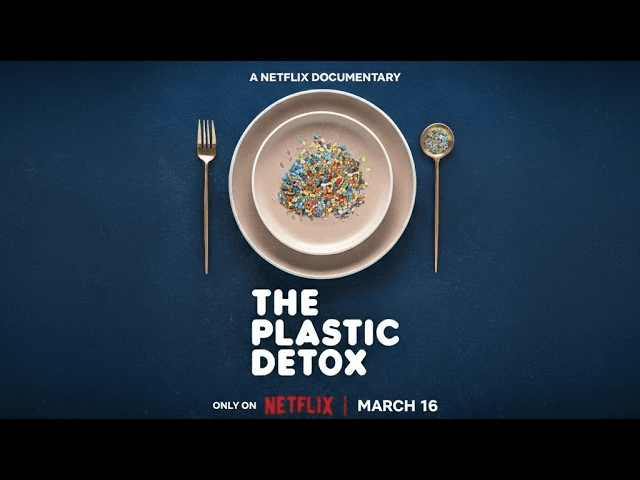
It was a Friday night. Wifey was traveling for work. The kids were asleep. So I was scanning Netflix for something easy — a comedy show, maybe a true-crime binge. Instead, the algorithm nudged me toward The Plastic Detox, a documentary directed by Louie Psihoyos, the Oscar-winning filmmaker behind The Cove, and co-directed by Josh Murphy. I almost scrolled past it and I'm deeply glad I didn't.
The film follows six couples who have been struggling with unexplained infertility, some for over a decade. Guided by Dr. Shanna H. Swan, a world-renowned environmental and reproductive epidemiologist, they embark on a 90-day experiment: systematically stripping plastics and plastic-derived chemicals from their everyday lives. Not in some dramatic, move-to-a-cabin way. In the mundane, heartbreaking way — replacing the Tupperware, reading the labels on shampoo bottles, rethinking the coffee pods, the nonstick pans, the children's toys.
The documentary doesn't just tell you plastics are bad. It shows you how the chemicals in them — phthalates, bisphenols, the family of endocrine-disrupting chemicals known as EDCs — quietly infiltrate your body through the most routine moments of your day. A microwaved lunch container. A receipt from the grocery store. The plastic lining inside the canned tomatoes you used for dinner. The polyester in your athleisure absorbed through your skin.
I turned off the TV. Looked at my home and said “Hmmm...”
The Audit That Changed Everything
The next morning, I did something embarrassingly simple: I walked through my home and just... looked. Really looked.
I opened the kitchen cabinets. I read the back of shampoo bottles. I turned over my 2-year-old's sippy cups and lunchboxes. I Googled ingredients I couldn't pronounce. And what I found was the same thing Dr. Swan shows her couples in the documentary — plastic isn't just a container. It's a silent, invisible ingredient woven into nearly every object we touch, wear, and consume.
I have a family of four. Two young kids. My wife and I both work. I'm not a careless person — I try buying organic when I can, I recycle, I think of myself as a relatively informed consumer. But that morning I counted seventeen plastic containers in my kitchen. Four types of personal care products with known endocrine disruptors on their ingredient lists. A nonstick pan my kids' eggs have been cooked on every single morning for a few years. The tea bags? Plastic mesh.
It wasn't anger I felt. It was something quieter and worse: the realization that I'd been exposing my family to something potentially harmful, day after day, without even knowing it was there.
The Science Is Not Settled. So What?
Let me be honest about something — because intellectual honesty matters, especially if I'm going to ask you to trust me enough to download an app I'm building.
The science connecting everyday plastic chemical exposure to specific health outcomes in humans is still developing. Dr. Swan's research is rigorous and widely cited, but the filmmakers are transparent: this was not a massive randomized clinical trial. The American Chemistry Council has noted that plastics are “highly regulated by more than a dozen federal laws.” Fair enough. Context matters.
But here's where I land, as a father and as an engineer: Global fertility rates have dropped over 50% in the past five decades. Research consistently links phthalates to observable changes in male reproductive development. Multiple independent studies tie EDCs to hormonal disruption, obesity, cardiovascular risk, shifts in thyroid hormone that can affect developing brains, and several types of cancer.
You do not need to wait for absolute clinical certainty to make reasonable changes in your life. I don't wait for a meta-analysis to wear sunscreen.
That's the principle I'm building on. Not fear. Not conspiracy. Just the simple, rational conviction that when the science is pointing in a clear direction — even if the final destination isn't fully mapped — you don't stand still.
The Tool That Didn't Exist
After that wake-up call, I did what any anxious parent with an engineering background would do: I tried to fix it. I went looking for tools. An app, a database, a scanner, anything that would help me understand what's actually in the products my family uses every day.
And I found... fragments. A few ingredient databases that require a chemistry degree to interpret. Some apps that haven't been updated in years. Blogs with conflicting advice. Government regulatory websites that are technically accurate but practically useless for a parent standing in a store aisle with a screaming toddler, trying to decide between two brands of lotion.
Scan a product. Understand the risk. Find a safer option.
That's the gap. That's what I'm building.
Building With Purpose
I'm an Enterprise Architect with a software engineering background. I've spent my career building technology products and lately obsessing about meaningful problems to solve. But this is the first time I've built something because I couldn't sleep at night without it existing.
Here's how it works. You scan or search for a product — a cleaning spray, a body wash, a children's toy, a food container. The app cross-references its ingredients against chemical databases, identifies endocrine disruptors, carcinogens, and chemicals of concern, and gives you a clear, understandable safety profile. Not a wall of chemical names. Not a PDF safety data sheet. A simple answer, with context, and critically, with safer alternatives you can switch to immediately.
The technology is being built with security and privacy at the center from day one — because if you're trusting an app with data about your health, that trust must be earned architecturally and embedded into the DNA of the product. We use AI-powered image recognition to make product scanning fast and accurate. I'll admit it's still a bit clunky, but the concept can grow into an absolutely stunning product that truly makes a meaningful difference in my life and yours.
Because my family's health deserves at least that much.
What I'm Asking You to Do
First, watch The Plastic Detox on Netflix. Not because it's perfect. Not because every claim has been clinically proven beyond doubt. But because it will make you look around your own kitchen, your own bathroom, your own life, and ask questions you haven't asked before.
Then, start small. Dr. Swan's practical advice is a perfect starting point: replace one plastic food container with glass. Switch one personal care product to something without “fragrance.” Stop microwaving food in plastic. Swap synthetic loungewear for natural fabrics. Check the lining of your canned goods. These steps cost almost nothing but shift the trajectory.
One of the couples from the documentary, Eric and Julie, welcomed their son in early 2026 after five years of struggling with infertility. They said something that has stayed with me: “We don't want our son, or anyone, to grow up in a world affected by this.”
The dramatic drop in the couples' chemical exposure wasn't because of some miracle treatment. It was because of awareness. Someone showed them what to look for and gave them the tools to make a different choice. That's all I'm trying to do.
Watch the Film
The Plastic Detox
Netflix · 2026 · 1h 30m
Directed by Louie Psihoyos & Josh Murphy. Featuring Dr. Shanna H. Swan. Six couples. 90 days. One question: can reducing plastic chemical exposure change your health?
Ready to protect your family?
Join the waitlist and be the first to know when Detox 4 Life launches.